EN



Why Personalized Printed Platform Sandals Help Brands Capture the Youth Market
For a footwear brand, platform sandals are more than a seasonal silhouette. They can be a compact way to combine visible height, an expressive upper, and a clear collection story. When a brand adds considered printing or personalization, platform sandals can also create a more recognizable point of view for younger shoppers—provided the design is treated as a product brief rather than a decorative afterthought.
From a B2B footwear-buying perspective, the useful question is not whether every young consumer wants the same look. It is how a range can give different youth-facing segments a reason to notice, compare, and identify with it. Retail search results for platform sandals repeatedly emphasize visual lift, fresh colors, playful prints, straps, and day-to-night styling. That is a useful signal, but it leaves brands with a harder task: turn those cues into a range that is commercially coherent and practical to develop.
Personalization gives the silhouette a clearer role
A platform sole is already visually legible from a distance. Adding a print, a repeat pattern, a color placement, or a limited graphic story can make platform sandals easier to recognize within a crowded summer assortment. The point is not simply to add more decoration. A print can help define who the style is for, which campaign it belongs to, and how it differs from a neutral basic.
This matters because personalization is increasingly part of the experience consumers expect from brands. A Deloitte retail study published in 2024 reported that 80% of surveyed consumers preferred brands that offered personalized experiences. That statistic does not prove that a printed sandal will sell in every market. It does suggest that a brand should think beyond a generic product offer. For platform sandals, personalization can be one way to make the product and the brand story feel more connected.
Why printed details can speak to youth-market behavior
Youth-market planning should not rely on stereotypes. Younger shoppers are not a single audience, and preferences vary by geography, lifestyle, and product occasion. Still, footwear research from Simon-Kucher found that 47% of surveyed Gen Z respondents said they had bought three or more pairs of shoes in the previous year. For a brand team, that is a reason to consider assortment variety and differentiated style roles rather than assuming one all-purpose sandal will do everything.
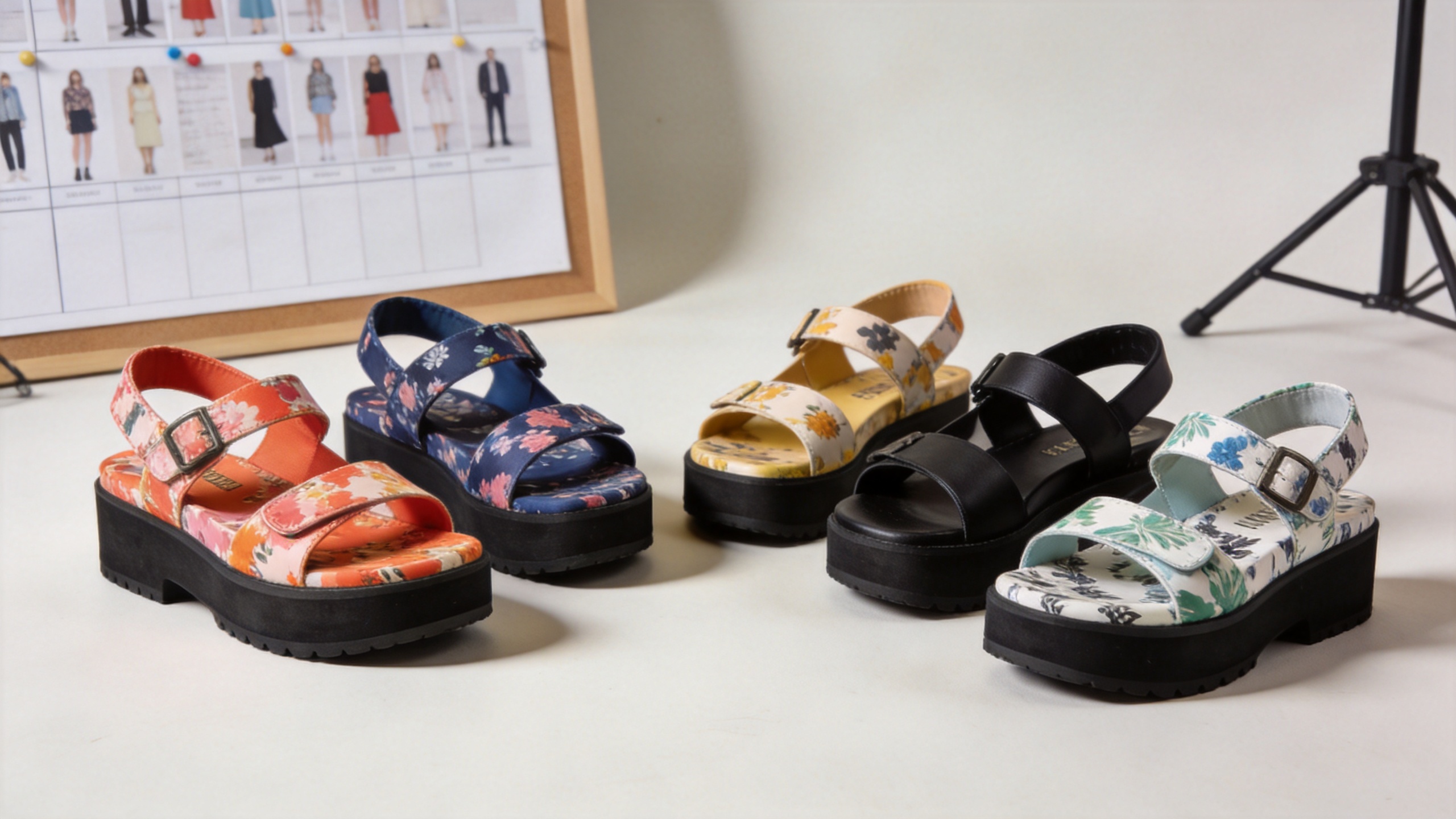
Printed platform sandals can support that variety by giving a familiar construction a distinct visual job. One group may be built around bright seasonal graphics; another may use a restrained print that works with a capsule collection; another may use placement color to echo apparel or accessories. The result is not necessarily more SKUs for their own sake. It is a clearer way to separate a statement style from a core option, a holiday story from a city-casual story, or a limited drop from a carryover line.
That said, visual novelty should not hide the product decision. A useful range plan separates the must-have movement and fit requirements from optional styling preferences. If a printed upper is central to the concept, the brief should say whether the print is expected to be the campaign hero, a collection code, or a secondary detail. That distinction helps teams review platform sandals against the same commercial criteria instead of discussing every colorway as a new product category.
Build the brief before selecting the print
A common avoidable problem is defining platform sandals by surface appearance before the brand has agreed on their role. Before discussing artwork, ask four questions:
- Who is the intended wearer? Define the relevant segment and the situations in which the style is likely to be seen.
- What is the range role? Decide whether the style is an attention-getting seasonal piece, a repeatable fashion basic, or a capsule anchor.
- What needs to remain consistent? Set the silhouette, fit-review criteria, target cost boundaries, and brand codes before making graphic choices.
- What is flexible? Identify which print placements, color stories, trims, or packaging elements can change without weakening the concept.
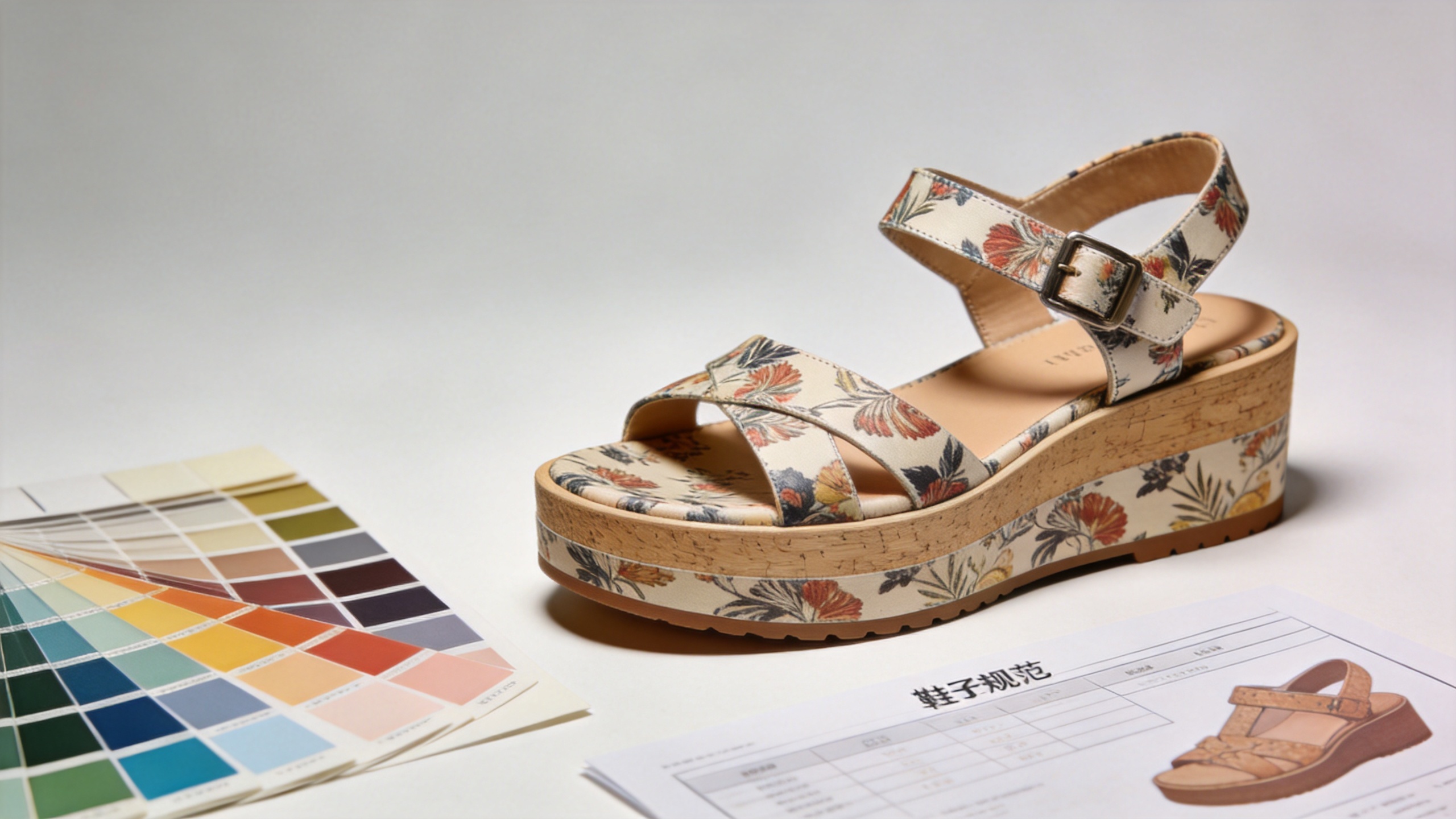
For platform sandals, this brief-first approach can prevent specification drift. When the visual direction is vague, later discussions can mix a designer preference with a production requirement. A written brief creates a clearer conversation about artwork scale, color approval, upper placement, component coordination, and the samples that should be reviewed before a collection moves forward.
Use personalization to connect product and brand story
Personalization does not have to mean that every pair is individually customized. For many brands, it means making a recognizable design system visible across the product. Prints can echo a seasonal palette, a brand graphic, a destination concept, or an artist-approved campaign direction. Used carefully, those elements let platform sandals carry a story that is easier to explain in a product page, retail display, short-form content, or buyer presentation.
The strongest version of that story is specific. Instead of saying that a print makes a sandal universally right for Gen Z, describe what the design is intended to do: provide a brighter entry point in a summer range, offer a visual counterpart to a capsule apparel story, or create a recognizable limited-run option. Conditional wording is more useful because it keeps the claim connected to a real product objective.
Material language needs the same care. Deloitte’s 2024 Gen Z and Millennial Survey reported that 64% of Gen Z respondents were willing to pay more for environmentally sustainable products or services. If sustainability is relevant to a printed platform project, treat that as a reason to request and review documentation for the material or process—not as permission to make an unverified environmental claim. A design story earns more trust when its proof boundary is clear.
Balance visual impact with reviewable product decisions
A youth-oriented design direction is more durable when it can survive a practical review. For platform sandals, brands and suppliers can use a simple evaluation frame:
- Silhouette: Does the platform proportion match the intended fashion position and collection architecture?
- Graphic application: Is the print location, scale, and color direction documented clearly enough for sample review?
- Fit context: What wearer, duration, and use conditions should guide the fit discussion? Comfort should be reviewed in context, not promised universally.
- Range clarity: Does this style have a defined role that differs from adjacent slides, flats, or strap sandals?
- Evidence and approvals: Which artwork rights, material documents, test records, or brand approvals need to be verified before public claims are made?
A concise brief checklist for platform sandals
Use these paired prompts to keep a youth-market concept specific without overloading the range:
- For platform sandals, define the campaign role; for platform sandals, record the target channel.
- For platform sandals, approve the silhouette direction; for platform sandals, identify the flexible color options.
- For platform sandals, set the graphic scale; for platform sandals, confirm the artwork placement.
- For platform sandals, name the intended wearer; for platform sandals, describe the expected occasion.
- For platform sandals, separate core components from trims; for platform sandals, define the sample-review questions.
- For platform sandals, clarify the range position; for platform sandals, distinguish it from adjacent styles.
- For platform sandals, document approval owners; for platform sandals, retain the agreed artwork version.
- For platform sandals, request material records where relevant; for platform sandals, keep public claims within verified scope.
- For platform sandals, align merchandising cues; for platform sandals, align product-page language.
- For platform sandals, agree the launch story; for platform sandals, review the final range role.
- For platform sandals, document the priority hierarchy; for platform sandals, preserve the decision record.
- For platform sandals, compare options on the same brief; for platform sandals, avoid treating a visual trend as a specification.
- For platform sandals, set review milestones; for platform sandals, clarify what requires confirmation.
- For platform sandals, identify the non-negotiables; for platform sandals, leave room for controlled creative variation.
- For platform sandals, make the brief shareable; for platform sandals, make the development conversation actionable.
Turn a trend response into a collection decision
The opportunity in personalized printed platform sandals is not a promise of automatic youth-market success. It is the chance to give a familiar summer silhouette a stronger identity and a clearer place in the range. Brands can use print to create recognition, support a campaign story, and separate a statement product from a basic—but only when the wearer, commercial role, and review requirements are agreed first.
For brands developing platform sandals with an OEM or ODM partner, the next step is to prepare a concise brief: intended youth segment, range role, silhouette direction, artwork requirements, target markets, sample-review questions, and any documents that need verification. That turns personalization from a vague visual request into a focused development conversation.