EN



What Cushioning Systems Reduce Foot Fatigue on Long-Distance Hiking Sandals?
For a long trail day, hiking sandals should be judged as a system, not by a soft footbed alone. Foot fatigue can build when repeated impact, small changes in foot position, hot spots, and muscular effort add up over hours. A softer sole may feel pleasant in a shop, but a long-distance setup also needs stable foot placement, useful support under load, and straps that keep the foot from working to stay centered.
For a wearer considering hiking sandals, comfort depends on walking duration, fit, surface, pack weight, and personal preference. That is why the most useful question is not “Which foam is softest?” but “Which combination of cushioning, shape, and retention still feels controlled late in the hike?”
Start with the source of fatigue
On a short, level walk, almost any comfortable pair of hiking sandals can feel adequate. Long distances reveal different problems. The heel and forefoot repeatedly meet the ground; the toes may grip to stabilize the sandal; and a loose strap can allow sliding that turns into friction. Descents can push the foot forward, while uneven ground can make a very soft platform feel vague rather than reassuring.
Research on trail and hiking footwear indicates that footwear can influence movement in demanding activity. It does not mean one construction removes fatigue for every person. It does support a practical approach: assess how the whole sandal manages impact, stability, and fit under the conditions you actually expect to hike.
The cushioning system: three layers working together
1. A contoured footbed spreads pressure
In hiking sandals, the footbed is the layer your foot notices all day. A lightly contoured surface can help locate the heel and support the arch area without forcing every foot into one shape. The goal is not an aggressively sculpted profile; it is a platform that reduces the need for your foot to search for a stable position with every step.
Check the heel cup, arch contact, and forefoot surface while standing and while walking downhill. If the contour creates a pressure point at the arch or the edge of the foot, it may become more noticeable after mileage and heat. A removable or replaceable insole is uncommon in many open designs, so the built-in footbed deserves careful attention.
2. A midsole should absorb impact without collapsing
The midsole in hiking sandals often combines foam, rubber, or a layered construction between the footbed and outsole. Softer foam can reduce the sharp feel of hard ground, especially on packed paths and pavement. Yet softness alone is not a fatigue solution. If the platform compresses too easily or lets the foot roll from side to side, lower-leg muscles may work harder to steady each step.
A useful test is to walk on a firm surface, take several controlled steps downhill, then stand on one foot. A balanced feel is often useful: enough give to blunt repeated impact, with enough structure that the heel does not sink or wander. Foam thickness can matter, but geometry, width, and sidewall support can matter just as much.
3. The outsole and chassis protect the platform
A durable outsole does more than provide traction. In well-chosen hiking sandals, it helps the cushioning layers keep a predictable shape across rocks, roots, compact dirt, and wet approaches. A very flexible sandal may feel natural on easy terrain but can let sharp edges reach the foot more directly. A stiffer chassis or protective layer can spread localized pressure, although too much stiffness may feel awkward for a wearer who prefers easy forefoot bend.
Match this layer to the route. Smooth paths may favor a more flexible ride, while rocky or uneven ground may call for a broader, more protective base. Notice the expected surface before assigning meaning to any outsole detail.
Why secure straps are part of cushioning
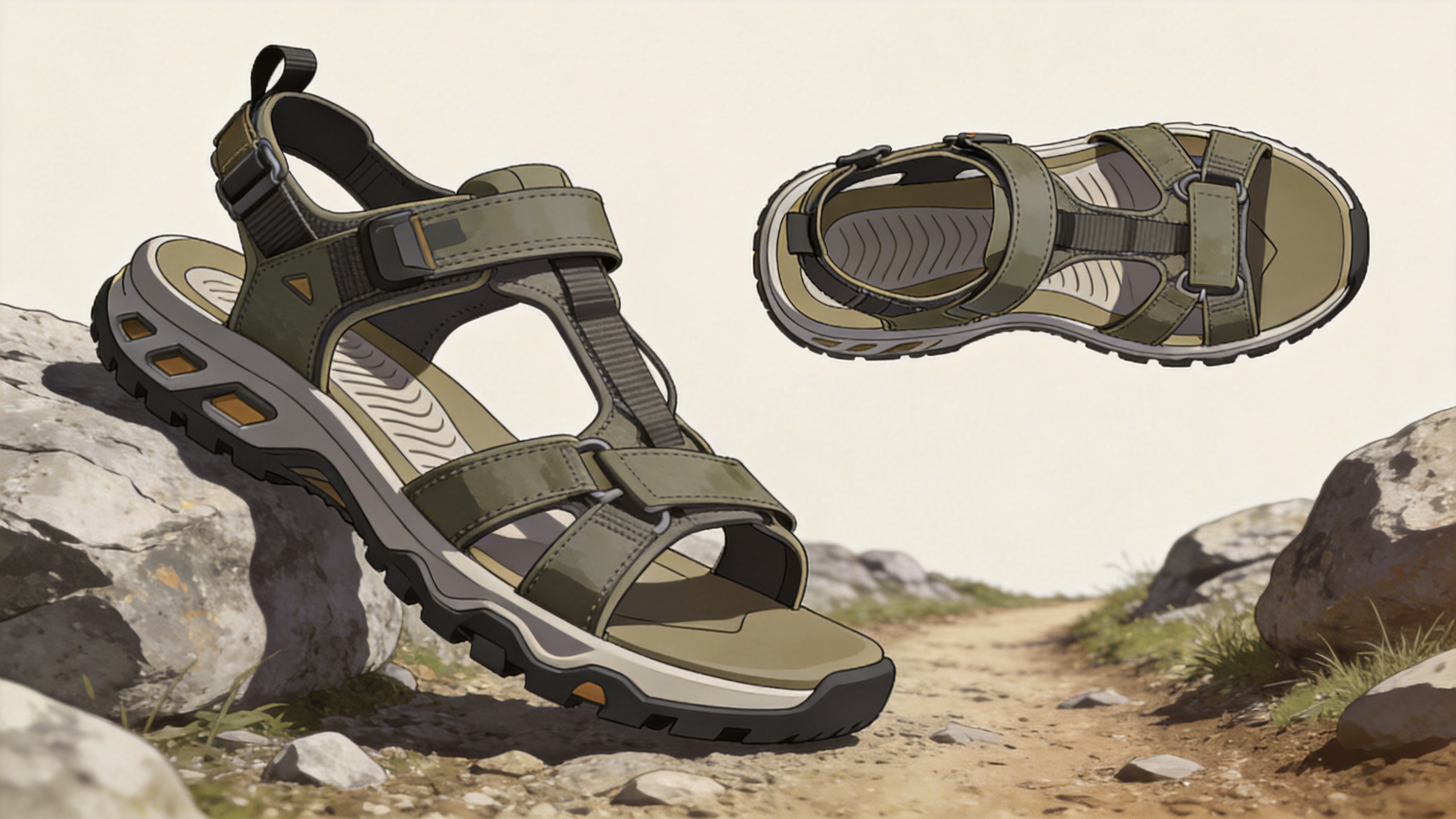
It is tempting to treat straps as separate from cushioning, but in hiking sandals they are part of the fatigue-management system. When the heel lifts, the forefoot slides, or the toes clench to keep the sandal on, a good footbed cannot do its job consistently. A secure heel strap, adjustable instep strap, and forefoot hold help keep the foot aligned with the cushioned zones designed to bear pressure.
Adjustment should feel firm rather than restrictive. Leave enough room for natural swelling, then test the fit on an incline. On descents, the toes should not crowd the front edge. American Hiking Society fit guidance likewise emphasizes comfort, shape compatibility, and adequate room when trying hiking footwear. For open footwear, that means checking both front clearance and strap pressure.
How to choose between soft, balanced, and firm hiking sandals
| System feel | May suit | Check before committing |
|---|---|---|
| Soft and flexible | Easy trails, short-to-moderate distances, wearers who want ground feel | Does the foot stay centered on side slopes and descents? |
| Balanced cushioning with a contoured footbed | Mixed terrain and repeated long walking days | Does the arch shape feel supportive without creating a pressure point? |
| Structured, protective platform | Rockier routes, a loaded pack, or wearers who prefer less sharp ground feedback | Can the forefoot still bend comfortably for your natural stride? |
No category is universally suitable. The word comfort is incomplete without fit, wearer, duration, and terrain context. The right pair of hiking sandals should make your chosen route feel more manageable, not ask your feet to compensate for a vague or poorly held platform.
Use a progressive break-in test
Do not make a first long hike the first serious test of new hiking sandals. Begin with a short walk, then add distance and include the surfaces you expect to encounter. Wear the socks, pack weight, or hydration load that you are likely to use on the actual route. After each outing, note hot spots, arch pressure, toe contact on descents, and whether the straps need repeated adjustment.
At first, a thicker sole can appear to answer the brief. More precisely, the better choice is the system that remains stable and comfortable as conditions change. If fatigue concentrates under the ball of the foot, assess forefoot cushioning and sandal flex. If your calves or toes feel overworked, check foot lockdown before simply looking for a softer midsole.
A practical checklist for long-distance hiking sandals
- Confirm the intended terrain, distance, and expected pack load.
- Walk downhill and across a slight side slope to check heel hold and toe clearance.
- Feel for pressure at the arch, heel edge, and ball of the foot after at least 15–20 minutes.
- Check whether the midsole cushions repeated impact while the platform still feels predictable.
- Make sure straps can be adjusted for warmth and normal foot swelling without rubbing.
- Increase mileage gradually before relying on hiking sandals for a multi-hour route.
Quick questions about hiking sandals and fatigue
Can more cushioned hiking sandals feel better on a long hike?
Not necessarily. Hiking sandals with very soft cushioning can feel inviting at first, but long-distance comfort also depends on whether the foot stays stable. If the platform feels unstable on uneven ground, the wearer may compensate with toe gripping or extra lower-leg effort. Compare hiking sandals by walking on the surfaces you expect to use, not only by pressing the footbed with your hand.
Are hiking sandals with arch contouring better for foot fatigue?
Hiking sandals with a mild, compatible arch contour may help some wearers maintain a more settled foot position over time. Others may find a pronounced contour distracting or uncomfortable. The practical test is simple: wear the hiking sandals long enough to notice whether the contour supports the foot without creating a focused pressure point.
When should a hiker choose more structured hiking sandals?
More structured hiking sandals can be worth considering when a route includes frequent rocks, uneven trails, long descents, or a heavier pack. The extra structure should still allow a natural stride. If a sandal feels stiff in a way that changes your gait, it may not be the right long-distance choice even when its cushioning is generous.
The bottom line
The cushioning systems most likely to reduce fatigue in hiking sandals combine a stable contoured footbed, resilient midsole cushioning, an outsole or chassis suited to the terrain, and dependable strap retention. Choose the balance that fits your foot and route rather than chasing the softest specification. When the foot stays positioned over a supportive, predictable platform, each step can demand less corrective effort over a long day.