EN



How Anti Skid Bottom Design of Flip Flops Improves Safety on Wet Ground
Wet tile, pool decks, shower areas, boat ramps, and rain-darkened pavements can change the way flip flops feel underfoot in a moment. Water forms a thin layer between the outsole and the ground, reducing the contact that helps a wearer control each step. An anti-skid bottom is not a promise that every pair of flip flops will be safe everywhere. It is a design approach that can help manage water, create useful contact edges, and give the wearer more predictable traction when the intended surface and use are understood.
For anyone reviewing flip flops, whether as a wearer, buyer, or footwear developer, the practical question is not simply whether the bottom looks textured. It is how the tread pattern, rubber compound, outsole shape, wear condition, and the wet surface work together. That distinction matters because a shallow decorative texture may behave very differently from a purposefully designed traction pattern.
Why wet ground makes flip flops easier to slip in
On dry ground, the outsole can make direct contact with many small high points on the surface. On wet ground, a water film may separate part of the sole from that surface. As weight transfers during a step, the outsole needs to move or break through some of that water before enough contact can develop. Smooth soles can leave more water trapped beneath them, especially on smooth tile or sealed concrete.
Flip flops also ask the wearer to manage a relatively open construction. A relaxed strap fit, hurried steps, slopes, loose debris, and sudden turns can all affect control. That said, it would be inaccurate to treat every wet surface or every wearer in the same way. Surface roughness, water depth, soap or oil contamination, outsole wear, and walking style all change the result.
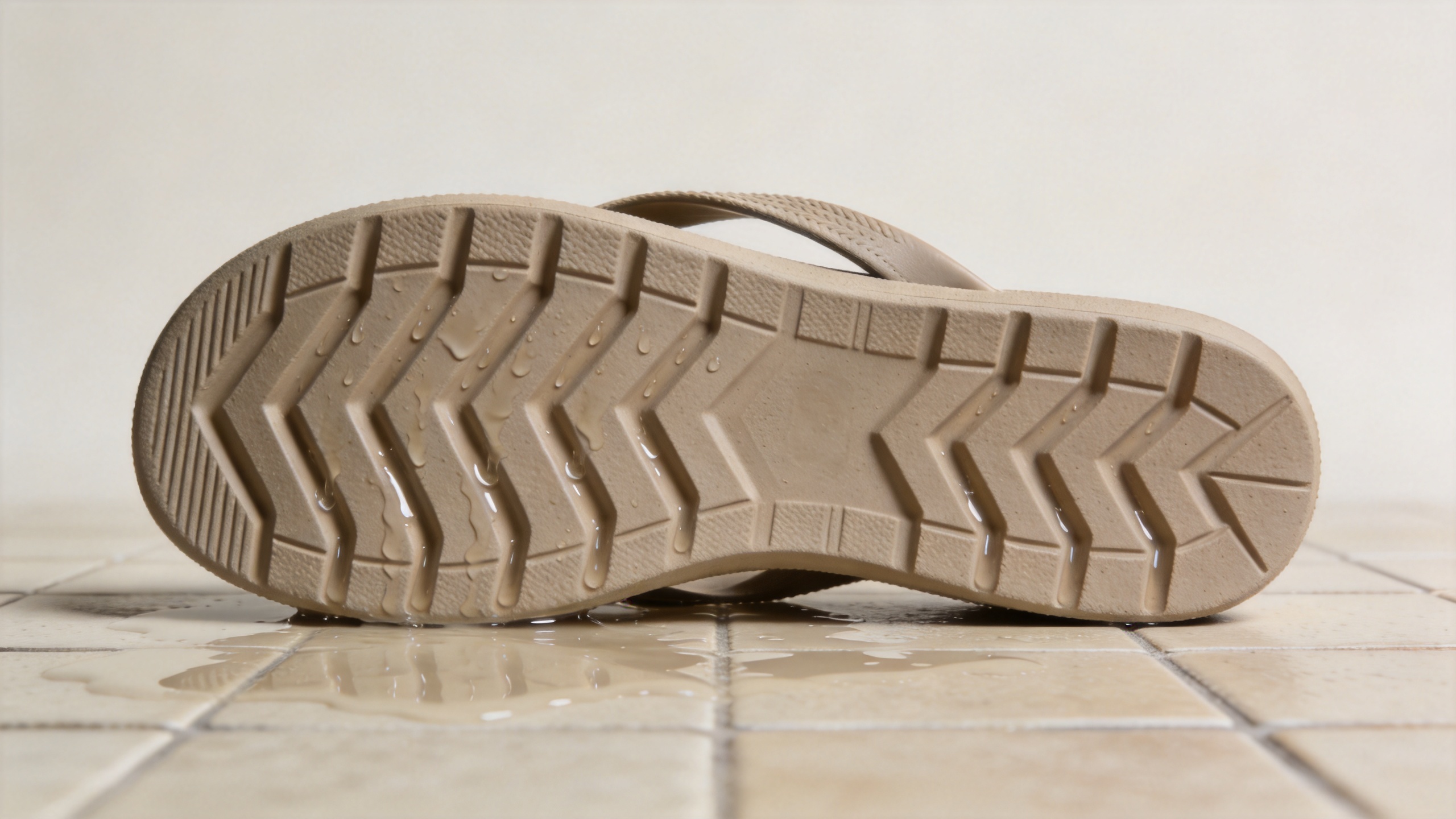
How anti-skid bottom design supports wet-surface traction
A useful anti-skid bottom normally combines several features rather than relying on one visual pattern. The goal is to create a more controlled interface between flip flops and the ground when conditions are damp or wet.
Tread channels give water somewhere to go
Grooves and channels can create escape paths for water as the outsole is loaded. Instead of trying to seal a flat sheet of sole against a wet floor, a channelled pattern may help release water from beneath the foot. The direction, depth, spacing, and openness of those channels influence how readily they can clear water and dirt. Very fine lines can look grippy yet clog or wear quickly, while a better-spaced pattern may retain clearer pathways.
For flip flops intended for wet-area use, inspect whether the channels run across more than one part of the outsole rather than appearing only at the heel or toe. The wearer moves through heel contact, midfoot loading, and toe-off, so traction should be considered across the full contact area.
Multiple contact edges help resist sliding
Lugs, sipes, chevrons, and broken geometric blocks create edges that can engage with small irregularities in the ground. Directional patterns can be useful because the forces during a step are not identical in every direction. For example, a pattern that interrupts forward-and-back movement may need complementary edges for sideways movement during a turn.
This does not mean deeper or more aggressive lugs are automatically better for all flip flops. A heavily lugged outsole can feel different on smooth indoor flooring, collect debris, or be unnecessary for a casual poolside brief. The better choice depends on the stated surface, expected water exposure, and the balance between traction, flexibility, and appearance.
Rubber compound and tread geometry work together
The material at the bottom of flip flops affects how the tread deforms and contacts the floor. A pattern cannot compensate for every material choice, and a softer-feeling compound alone does not verify wet traction. In a development brief, it is more useful to assess the compound and geometry as a system: does the outsole keep defined edges, flex where the foot bends, and maintain meaningful tread after expected wear?
Wear is especially important. As flip flops are used, the sharpness of contact edges can reduce and channels can become shallower. A design review should therefore look at the tread both when new and after an appropriate wear assessment, rather than treating a new-sample appearance as a permanent outcome.
What to check beyond the tread pattern
Anti-skid design is one part of a wider wet-ground safety discussion. A secure-feeling pair of flip flops should also be reviewed for fit and intended use. If the foot can slide significantly within the upper, the wearer may struggle to use the traction that the outsole provides. A strap arrangement should hold the foot appropriately for the planned activity without turning a casual style into an unsupported performance claim.
- Surface: Is the intended ground smooth ceramic tile, textured concrete, a pool surround, or an outdoor path after rain?
- Contamination: Is the concern clean water, or could soap, sand, oil, sunscreen, or algae be present?
- Use pattern: Will the flip flops be used for short, slow walking or for repeated movement on a larger wet area?
- Maintenance: Can channels be cleaned, and can the wearer recognize when the tread has become worn?
- Fit: Does the strap and footbed arrangement suit the wearer and allow controlled steps?
These questions prevent a common shortcut: calling any patterned bottom “non-slip” without defining the condition behind the claim. More precisely, an anti-skid design can be specified for particular wet-use conditions, then reviewed against those conditions.
Why testing and clear claims matter
Visual inspection is a starting point, not complete proof. ASTM F2913 is a recognized whole-shoe test method used to evaluate coefficient of friction and slip performance of footwear and flooring under defined conditions. For a brand or buyer developing flip flops, a relevant test request should describe the intended floor, contamination condition, and sample configuration. A result should not be carried over from one outsole compound or tread pattern to another without confirmation.
Controlled testing also has limits. Real walking includes different body movements, worn soles, changing weather, and surfaces that may not match a laboratory condition. Therefore, even flip flops with a tested traction result should be presented with wording that states the tested condition and avoids implying universal slip prevention. Good product communication connects the design, the test scope, and the real use case.
A practical review checklist for wet-ground flip flops
- Define the wet surface and likely contaminants before choosing an outsole pattern.
- Review whether channels create continuous drainage paths across key contact zones.
- Check that the tread has varied contact edges for forward, backward, and lateral movement.
- Assess tread depth, flexibility, and compound together rather than judging texture alone.
- Confirm that strap fit and foot containment suit the proposed activity.
- Request test information that names the method and conditions before making a traction claim.
- Plan wear and cleaning guidance so the anti-skid features can remain visible and functional.
Safer choices start with the right use conditions
Thoughtful anti-skid bottoms can improve the wet-ground performance of flip flops by helping water escape, creating useful contact edges, and supporting controlled outsole contact. But traction is conditional: it depends on the outsole, the surface, the level of contamination, the degree of wear, and the way the flip flops fit the wearer. For a footwear brief, start with the actual wet-use scenario, then specify the tread, material, fit review, and validation method that match it. That approach is more useful—and more responsible—than treating a textured sole as a guarantee.