 ×
×
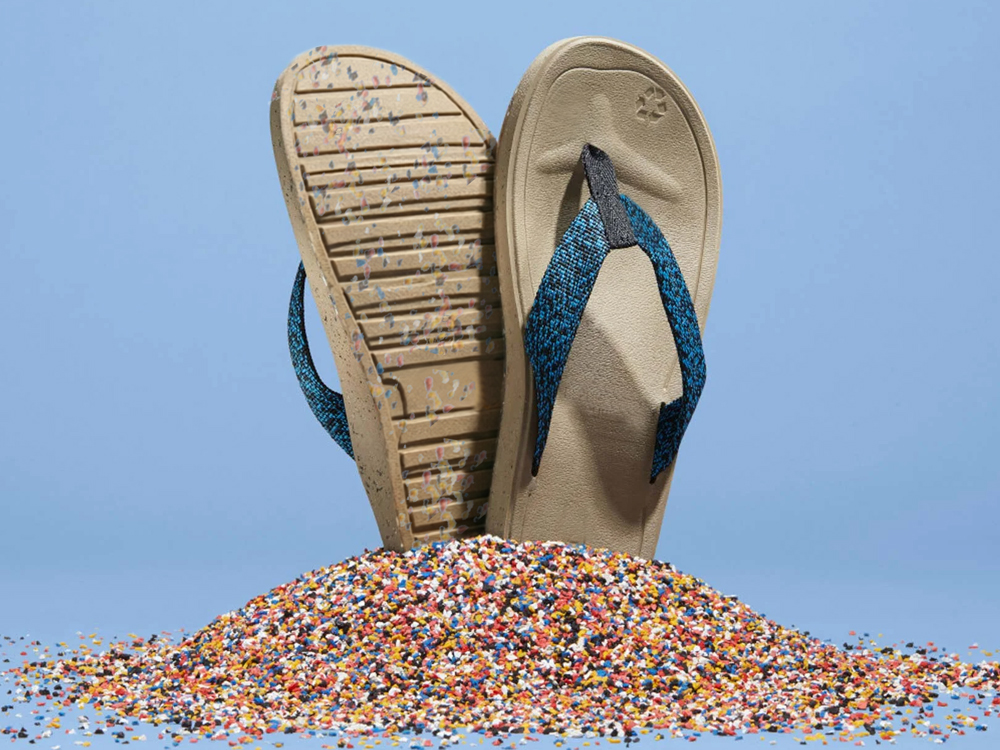
1.Why is the use of Recycled Materials in shoe manufacturing being promoted?
Reducing Environmental Pollution and Waste
・ Reducing Hazardous Material Emissions: Traditional leather tanning and synthetic material production processes consume large amounts of water and release heavy metals and toxic chemicals, potentially polluting water sources.
Resource Conservation and Government policy Efforts
・ Resource Recycling: Using recycled waste (such as PET bottles, coffee grounds, and even waste silicon wafers) as raw materials can reduce dependence on primary resources like petroleum.
・ Government policy Efforts: For example, Europe has legislated against the destruction of inventory and implemented digital product passports, forcing shoe companies to adopt single-material design and full life-cycle recycling responsibility from the design stage.
Brand Strategy and Market Demand
・ Brand Leadership: Well-known brands such as Nike and Adidas have set environmental goals such as using 100% recycled polyester fibers, driving the green upgrade of the entire industry chain.
・ Shifting Consumer Awareness: Modern consumers are increasingly focused on the "Eco-credentials" of products. Brands are launching recyclable series to enhance their brand image and attract environmentally conscious consumers.
Solving Recycling Technology Challenges
・ Single Material Development: Traditional shoes are extremely difficult to disassemble due to their complex structure. Currently, the industry is advocating "circular design," such as developing Modular design or using a single recyclable material, so that shoes can truly enter the recycling system after they are discarded.
Design and Disassembly Challenges (The Core Challenge)
・ Structural Complexity: A typical athletic shoe often consists of more than 60 different components, including leather, plastic, textiles, metals, and various foam materials.
・ Adhesive Barriers: To ensure durability, the sole and upper are usually tightly bonded with strong chemical adhesives. This "irreversible" connection method makes physical dismantling after disposal extremely difficult and time-consuming, resulting in only about 5% of shoes being recycled globally.
The Trade-off Between Performance and Durability
・ Material Degradation: The performance of recycled plastics declines after multiple cycles. Ensuring that shoes made from recycled materials maintain the same elasticity, grip, and support as those made from virgin materials remains a technical challenge.
・ Comfort Challenges: Some bio-based or recycled materials may have poor breathability, excessive weight, or a stiff feel, affecting the consumer's wearing experience.
Economic Costs and Supply Chain Pressures
・ High Costs: The collection, cleaning, sorting, and remanufacturing processes for recycled materials are very complex. Currently, the production cost using high-quality recycled materials is often higher than using inexpensive petroleum-derived virgin materials directly.
・ Unstable Supply: High-quality, stable-performance recycled materials are in short supply, and the lack of standardized industry norms leads to significant fluctuations in material quality between different batches.
Lack of Infrastructure and Recycling Systems
・ Insufficient Recycling Points: Unlike waste paper or plastic bottles, a global system specifically for collecting and sorting used shoes is not yet mature.
・ Low-Value Recycling: Current recycling technologies are mostly "Downcycling ." Old shoes are often shredded into low-value particles and used for laying running tracks or floor mats, making it difficult to truly achieve a high-quality "shoe-to-shoe" closed loop.
Consumer Attitudes and Market Perception
・ Quality Doubts: Some consumers still equate "recycled materials" with "second-hand" or "low-quality."
・ Environmental Premium: Due to high production costs, environmentally friendly shoes are usually more expensive. Without strong policy subsidies or tax incentives, it is difficult to replace traditional shoes on a large scale.
3.Which Materials are used for Recycling?
Recycled Synthetic Materials
These materials use physical or chemical methods to transform existing waste industrial or consumer goods back into shoe-making raw materials.
・ Recycled Polyester (R-PET): The most common category. Recycled plastic bottles are converted into fibers for manufacturing shoe uppers, shoelaces, and linings.
・ Recycled Ocean Plastics: Such as the materials used by Adidas in collaboration with Parley. By intercepting waste plastics about to enter the ocean, they are processed into high-performance yarns.
・ Recycled Rubber: Waste from the production process or old tires are shredded and remixed into new materials to manufacture midsoles or outsoles. The proportion of recycled components is constantly increasing, but it is usually mixed with virgin materials to maintain performance.
Bio-based and Natural Materials
These materials originate from nature, reducing dependence on fossil fuels (oil), and some are biodegradable.
・ Plant-based Leather: Made from agricultural waste. Examples include grape skins, apple peels, pineapple fibers, and cactus leather.
・ Algae/Cork Materials: Algae extracted from water bodies are used to make foamed midsoles, or natural cork is used for insoles.
・ Fungal/Mycelium Materials: Such as the mycelium leather used by Stella McCartney, which can decompose naturally within months under certain conditions.
Mono-material Design
This is a major trend in 2026. To address the problem of traditional shoes being "difficult to disassemble and recycle" due to the complex bonding of multiple materials, brands are beginning to adopt mono-material designs.
・ All-TPU Design: The entire shoe, from the upper to the outsole, is composed of different forms of thermoplastic polyurethane (TPU). These shoes do not require disassembly at the end of their lifespan; they can be directly crushed, melted down, and recycled.
Classification by Circular Stage
・ Pre-consumer Waste: Scrap materials and discarded mold parts generated during factory production.
・ Post-consumer Waste: Shoes donated or recycled by users after wear, garbage collected from the ocean, old carpets, or fishing nets.
4.Future Prospects for Recyclable Material Applications
Combining Recycled Materials with 3D printing technology may create 100% biodegradable shoes in the future. Large-scale production reduces costs, while precise material allocation preserves the shoe's original elasticity, grip, and other properties. It is believed that with the advancement of environmental awareness and consumer consciousness, every inch of material will ultimately come from nature and return to nature.

Xiamen Pegasus Sandals Limited is a trusted OEM/ODM sandals manufacturer for outdoor hiking sandals, casual sandals & slides. Certified (BSCI/PVH/SLCP), eco-materials, 20+ years serving TOMMY HILFIGER, CK, HUSH PUPPIES. Request quote today.
Unit 406-409, 4/F Peitao Building, Huaxia Industry Center, No.43 Tiyu Road, Siming District, Xiamen, China
Copyright © 2026 by Xiamen Pegasus Sandals Limited Privacy Policy

 EN
EN

